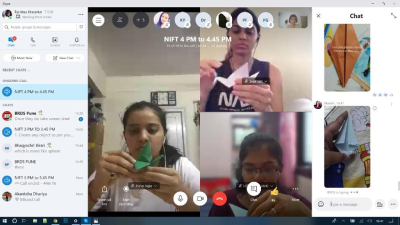
Live Classes

Personalized feedback

Assignments Solving
India's No. 1 Design Coaching Institute
India's No. 1 Design Coaching Institute
BRDS is proud to announce that BRDS has the highest selection of students in NID NIFT IIT-UCEED / CEED NATA CEPT this year as compared to any coaching institute in India.
Avail Rs. 1 Crore prize money if you prove that any other coaching Institute has more results than BRDS.


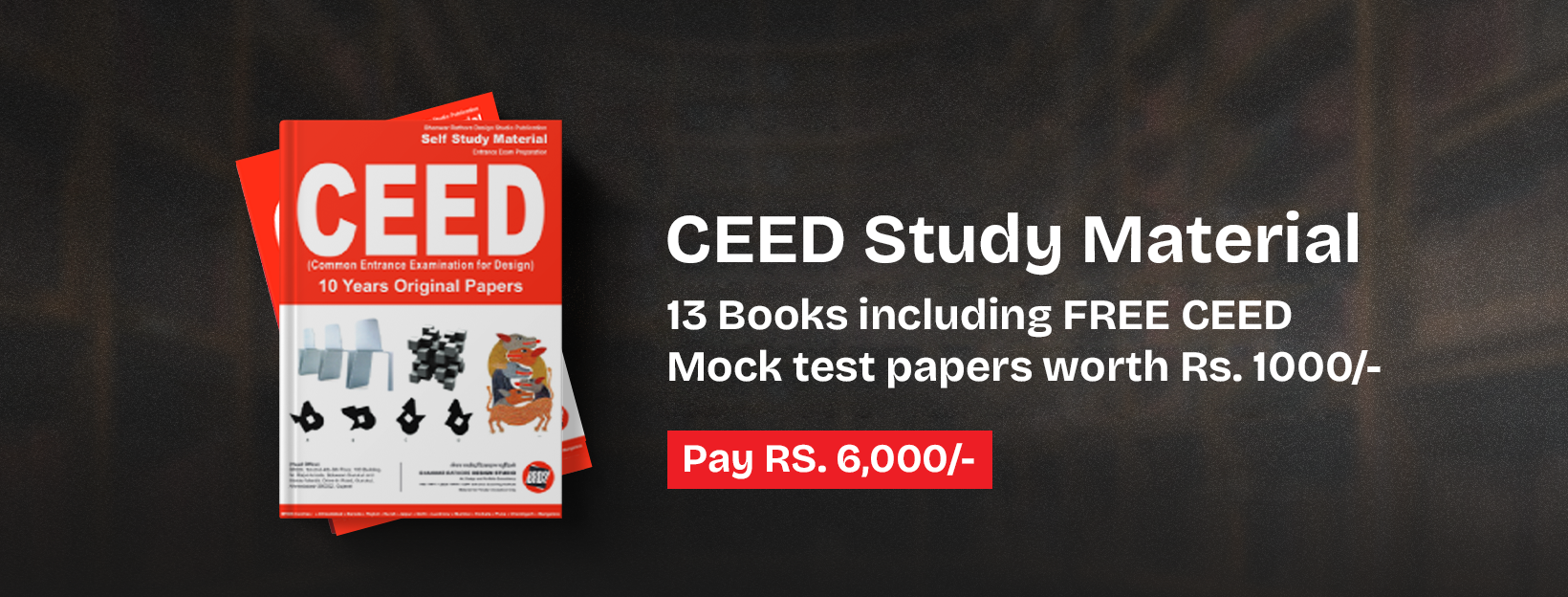

Common Entrance Examination for Design (CEED) is a national-level entrance examination administered by IIT Bombay on behalf of the Ministry of Education, Government of India. It is the entry point to Master of Design (M.Des) and PhD programs at leading design schools in India including IISc Bangalore, IIT Bombay, IIT Delhi, IIT Guwahati, IIT Hyderabad, IIT Kanpur, IIT Gandhinagar, IIT Jodhpur, and IIITDM Jabalpur, among 25+ participating institutes.
CEED assesses applicants in the domain of visual perception, design aptitude, creativity, drawing capability, analytical reasoning, and problem-solving capability. The exam is conducted once a year in January and consists of two parts: Part A (computer-based, objective) and Part B (paper-based, subjective). Part B answer booklets are only graded for candidates who pass the Part A cutoff.
Important: The final score is computed as Final Score = 0.25 × Part A Marks + 0.75 × Part B Marks, making Part B preparation the most crucial component. There is no age limit or attempt constraint for CEED. However, the CEED score is valid only for one year after result declaration. Qualifying CEED does not guarantee admission — candidates must individually apply to participating institutes and pass through additional rounds including portfolio review and personal interviews.
| Event | Date |
|---|---|
| Regular Registration | 1 October–5 November 2026 |
| Late Registration | 6–10 November 2026, 5:00 PM |
| Admit Card Download | 1 January 2027, 1:00 PM |
| Examination | 17 January 2027, Sunday, 9:00 AM–12:00 Noon |
| Draft Answer Key for Part-A | 19 January 2027 |
| Last Date for Comments on Draft Answer Key | 21 January 2027, 5:00 PM |
| Final Answer Key for Part-A | 26 January 2027, 5:00 PM |
| Announcement of Cut-off Marks for Part-A | 4 February 2027 |
| Declaration of Results | 3 March 2027 |
| Scorecards Available for Download | 10 March 2027 |
| Last Date for Scorecard Download | 31 July 2027 |
Registration dates reflect the extension announced on the official CEED 2027 website.
The CEED 2026 exam is conducted in a single session — 9:00 AM to 12:00 Noon — and consists of two mandatory parts that all candidates must attempt.
Part A is an objective-type online screening test with three question types:
Total: 41 questions | Part A contributes 25% to the final CEED score. Candidates must score above the Part A cutoff for their Part B to be evaluated.
Part B consists of 5 descriptive questions worth 20 marks each (total 100 marks). It tests design thinking, drawing, creative writing, and problem-solving. Question types include figure drawing, product design/redesign, visual composition, design scenario, and written expression. There is no negative marking in Part B.
Part B contributes 75% to the final CEED score — making drawing and creative ability the most important skills to develop.
Final Score = 0.25 × Part A Marks + 0.75 × Part B Marks
Candidates must bring their own drawing materials — pens, pencils, and colours (no electronic devices allowed).
The CEED 2026 application process was completely online at the official IIT Bombay admission portal: ceed.iitb.ac.in. Candidates were required to choose three exam city preferences at the time of registration. The exam was held across 27 cities including Ahmedabad, Bengaluru, Chennai, Delhi, Hyderabad, Jaipur, Kolkata, Mumbai, Pune, and more.
CEED 2026 registrations are now closed. The next cycle — CEED 2027 — is expected to open for applications in October 2026 at ceed.iitb.ac.in. BRDS helps you start early preparation so you are fully ready when the next application window opens.
The CEED 2026 result was declared on 4 March 2026 on the official website ceed.iitb.ac.in. Candidates can log in using their registered email ID and password to download their scorecard. The scorecard is available for download from 10 March 2026 to 31 July 2026 and is valid for one year from the date of result declaration.
Part A marks are displayed for all candidates who appeared in CEED 2026. Part B marks are shown only for candidates whose Part B answer books were evaluated (i.e., those who cleared the Part A cutoff). Only shortlisted candidates are assigned a merit rank. After results, candidates must apply directly to each participating institute through the respective institute's admission portal. IIT Bombay does not conduct joint seat allotment for CEED — all counselling is managed at the institute level.
BRDS has consistently produced outstanding results in CEED and UCEED admissions combined. With 1,617 students qualifying CEED and UCEED in 2026 — including 86 in the Top 100 — and a total of 6,526 qualified students since 2005, BRDS is India's highest result-producing coaching institute for CEED. Our specialized coaching methodology, expert IIT and NID alumni faculty, comprehensive Part A and Part B study materials, and focused drawing practice have helped hundreds of students earn admission to IITs and IISc for their M.Des programs.
Copyright © BRDS 2026. All Rights Reserved | Blog | | | |
Hover over a location to see a preview